
GEO vs SEO: Why Traditional SEO Still Powers AI Search
While AI search tools like ChatGPT and Perplexity are changing how users find information, they still rely on traditional search engines for current data, meaning successful "Generative Engine Optimization" requires combining solid SEO fundamentals with content formatted for easy AI citation rather than abandoning proven strategies.

The marketing world is buzzing with talk of "GEO" – Generative Engine Optimization – as ChatGPT, Perplexity, and other AI tools reshape how people search for information. With predictions that AI will replace Google as the primary search method, many marketers are scrambling to understand this new landscape.
But here's the reality check: while the user experience is evolving, the fundamental mechanics of how content gets discovered haven't changed as dramatically as you might think.
What Is GEO (Generative Engine Optimization)?
GEO, or Generative Engine Optimization, is the practice of optimizing content to appear in AI-generated responses from tools like ChatGPT, Claude, Perplexity, and Google's AI Overviews. Unlike traditional search results that show a list of links, these AI tools provide direct answers, often citing specific sources.
The term emerged as marketers recognized that AI search behavior differs from traditional search engine usage, potentially requiring new optimization strategies.
The Technical Reality Behind AI Search
To understand how to optimize for AI search, we need to demystify how these systems actually work. Most marketers misunderstand this crucial point: Large Language Models (LLMs) themselves don't have access to current information.
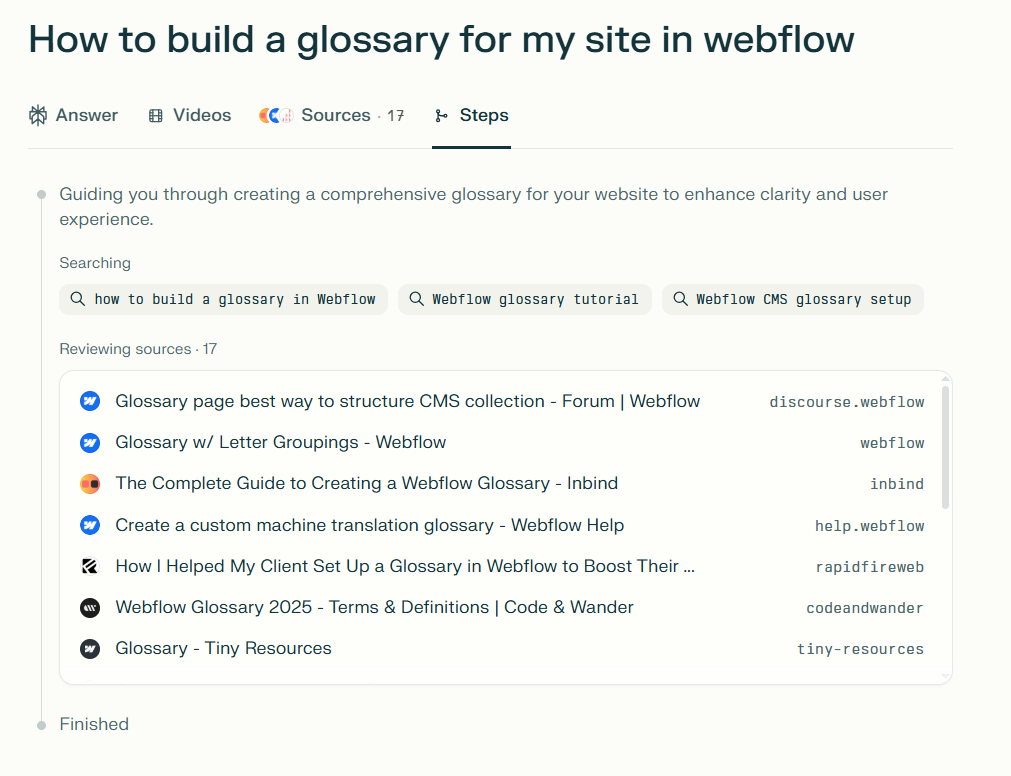
Here's what actually happens when you ask ChatGPT to find recent information:
The LLM recognizes your query needs current data
The application layer (not the AI model) calls a search API
Search results are retrieved from traditional search engines
The LLM processes and synthesizes these results into a response
This means that when you see ChatGPT providing current information, it's actually using the same search infrastructure that powers traditional SEO – just with an AI layer interpreting and presenting the results.
Why Traditional SEO Still Forms the Foundation
Since AI tools rely on traditional search engines to retrieve current information, the fundamental principles of SEO remain critical:
Keywords Still Matter
AI search tools use keyword-based queries when searching for information. Your content still needs to be discoverable through relevant keywords and search terms.
Technical SEO Remains Essential
JSON-LD schema markup helps search engines understand and index your content
Site structure and crawlability affect whether your content gets indexed
Page speed and mobile optimization influence search engine rankings
Content Quality Standards Apply
Search engines continue to prioritize authoritative, well-researched content that genuinely addresses user needs and intentions. Content that demonstrates expertise, provides comprehensive information, and answers users' questions thoroughly will consistently rank higher in search results. This emphasis on quality hasn't changed with the advent of AI search tools - in fact, it has become even more important as these systems aim to surface the most reliable and valuable information to users. Search algorithms are increasingly sophisticated in evaluating content depth, accuracy, and relevance to user queries, making superficial content optimization tactics less effective than ever before.
What's Actually Changing: The User Experience Layer
While the underlying search mechanics remain similar, the way users interact with search results is evolving significantly:
AI Previews and Featured Snippets
Google now shows AI-generated overviews for many queries, and other search engines are following suit. These features pull information directly from web pages and present it in a conversational format.Direct Answer Format
Instead of clicking through multiple links, users increasingly expect immediate, comprehensive answers to their questions.Citation-Based Results
AI tools typically cite their sources, but users may not always click through to the original content, changing traffic patterns.
The New Content Strategy: Optimizing for Quotability
The biggest shift in content strategy involves making your content easily quotable and referenceable by AI systems. Here's how:
Structure Content for Easy Extraction
Create Quotable Facts and Statements Format key information in clear, standalone sentences that can be easily extracted and cited. Think of each important point as a potential quote that could appear in an AI response.
Use Clear Headers and Subheaders Well-structured content with descriptive headers helps both search engines and AI tools understand your content hierarchy and find relevant information quickly.
Leverage High-Value Content Types
Glossaries and Definitions Glossaries are particularly valuable for AI optimization because they provide clear, quotable definitions. Companies like Twilio have seen an 86% increase in traffic to glossary pages through strategic SEO implementation. Major brands like HubSpot and Mailchimp have built extensive glossary sections that serve both users and AI search tools effectively. If you're using Webflow, you can create an effective glossary that serves both users and AI search tools.
FAQ Sections Frequently Asked Questions are perfect for AI tools because they directly match user query patterns. Consider adding FAQ sections to:
Individual blog posts
Product pages
Service descriptions
Topic clusters
Case Studies and Examples Concrete examples and case studies provide quotable, factual information that AI tools can reference when answering related queries. Including specific statistics, measurements, and research findings makes your content even more valuable as citation material.
Research and Data Original research, surveys, and data analysis are extremely valuable for AI citations. Content backed by proprietary statistics and first-party research is more likely to be referenced as an authoritative source. Consider implementing systems to collect industry-specific data that you can analyze and publish regularly.
Format for AI Consumption
Keep Key Points Concise AI tools often have limitations on quote length (sometimes around 30 words for copyright compliance). Structure your most important points to be self-contained within these limits.
Use Bullet Points and Lists Well-formatted lists are easier for AI tools to parse and quote accurately.
Include Statistical Data Numbers, percentages, and data points are highly quotable and valuable for AI responses.
Practical Implementation Strategy
1. Audit Your Existing Content
Review your current content to identify:
Key facts and statistics that could be better formatted for quotability
Opportunities to add FAQ sections
Topics that would benefit from glossary entries
2. Develop AI-Friendly Content Types
Create comprehensive glossaries for your industry terms
Expand FAQ sections across your website
Write definitive guides that can serve as authoritative sources
Develop case study content with clear, quotable outcomes
3. Establish Original Research and Data Collection Systems
Consider developing your own research capabilities, as first-hand information and hard numbers are increasingly valuable for both traditional SEO and AI citations. Original data positions your content as an authoritative source that AI tools are more likely to reference. Effective approaches include:
Conduct customer surveys and industry studies to generate unique, quotable insights
Implement performance benchmarking using your own client or user data
Create annual reports and trend studies that establish your authority as a data source
Build systematic data collection processes through automated dashboards and regular feedback loops
4. Maintain SEO Fundamentals
Continue keyword research and optimization
Keep technical SEO best practices updated
Focus on E-E-A-T (Expertise, Experience, Authoritativeness, and Trustworthiness)
Build quality backlinks to increase domain authority
5. Monitor and Adapt
Track which content gets cited in AI responses
Monitor changes in search traffic patterns
Test different content formats for AI visibility
Stay updated on AI search tool developments
Analyze which of your original research pieces get the most citations and double down on similar content formats
Looking Forward: Evolution, Not Revolution
While AI search represents a significant shift in user experience, it's more evolution than revolution from a content strategy perspective. The most successful approach combines:
Solid SEO fundamentals that ensure discoverability
AI-optimized content formatting that improves quotability
User-focused content creation that serves genuine needs
Technical excellence that supports both traditional and AI search
Original research capabilities that establish your content as an authoritative source
The companies that will succeed are those that adapt their content strategy thoughtfully, building on proven SEO principles while embracing the new opportunities that AI search presents.
Remember: the goal isn't to game the system or chase the latest trend, but to create genuinely valuable content that serves users – whether they find it through traditional search engines, AI tools, or any future technology that emerges.
Key Takeaways
AI search tools still rely on traditional search engines for current information
SEO fundamentals remain crucial for discoverability
Content formatting for quotability is the biggest new opportunity
Glossaries and FAQs are particularly valuable content types for AI optimization
Original research and first-party data collection create highly quotable, authoritative content
Understanding how systems work beats guessing at optimization tactics
Success requires combining traditional SEO with AI-specific content strategies
Systematic data collection processes ensure a continuous stream of fresh, citable content
The future of search is here, but it's built on the foundation of everything we already know about creating valuable, discoverable content.